The Map and the Compass: A Parent's Guide to Nurturing Your Child's Development
Child development isn't a checklist to race through; it's a landscape to explore together. This guide offers practical, evidence-informed ways to be your child's most supportive guide.
For many parents, "child development" can feel like a daunting report card—a list of milestones where we fear our child might fall behind. But what if we shifted that view? Child development is not a standardized test; it's the unique, unfolding story of your child becoming themselves. Your role isn't to be a frantic tutor drilling for exams, but a trusted guide, providing a secure base from which they can explore the world. This guide is your map and compass: an evidence-informed, empathetic look at how you can confidently support your child's journey, from infancy through the early school years.
Understanding the Whole Child: It's More Than Milestones
Development happens in interconnected domains: cognitive (thinking and learning), social-emotional (relationships and feelings), physical (both large and small motor skills), and language. A leap in one area often influences another. For example, when your toddler gains the physical skill to walk (physical), their world expands, which boosts curiosity (cognitive) and may lead to frustration when they can't reach something (social-emotional). Your job is to nurture all areas, not just the most measurable ones. Observe your child's unique interests and temperament—these are your clues to how they learn best.
The Foundational Force: Secure Attachment
Before flashcards or fancy toys, the single most important factor for healthy development is a secure attachment—the deep, trusting bond your child forms with you. This is built through consistent, responsive care. When your baby cries and you soothe them, or your toddler looks to you after a fall and you offer a hug, you are building their brain's architecture for security. This secure base becomes their inner confidence, allowing them to manage stress, explore, and form healthy relationships later in life. What to avoid: Trying to be a "perfect" parent. It's consistency and repair (saying "I'm sorry" after you lose your cool) that build trust, not perfection.
Age-Banded Insights & Practical Routines
Infants (0-12 months)
* Focus: Responsive care, sensory exploration, and bonding.
* Routine Tip: Weave "serve-and-return" into diaper changes. Make eye contact, mirror their coos, describe what you're doing. (“I’m wiping your little hands. One, two!”)
* What to Avoid: Overstimulation with constant noise or toys. Quiet, focused interaction is richer.
Toddlers (1-3 years)
* Focus: Safe exploration, language explosion, and managing big feelings.
* Routine Tip: Create a simple "helping" ritual. Let them put a wipe in the trash, carry a plastic cup to the table. Name their emotions: “You’re so frustrated the block won’t fit!”
* What to Avoid: Power battles. Offer limited choices (“Red shirt or blue shirt?”) and use routines to transition.
Preschoolers (3-5 years)
* Focus: Pretend play, peer interaction, and foundational self-regulation.
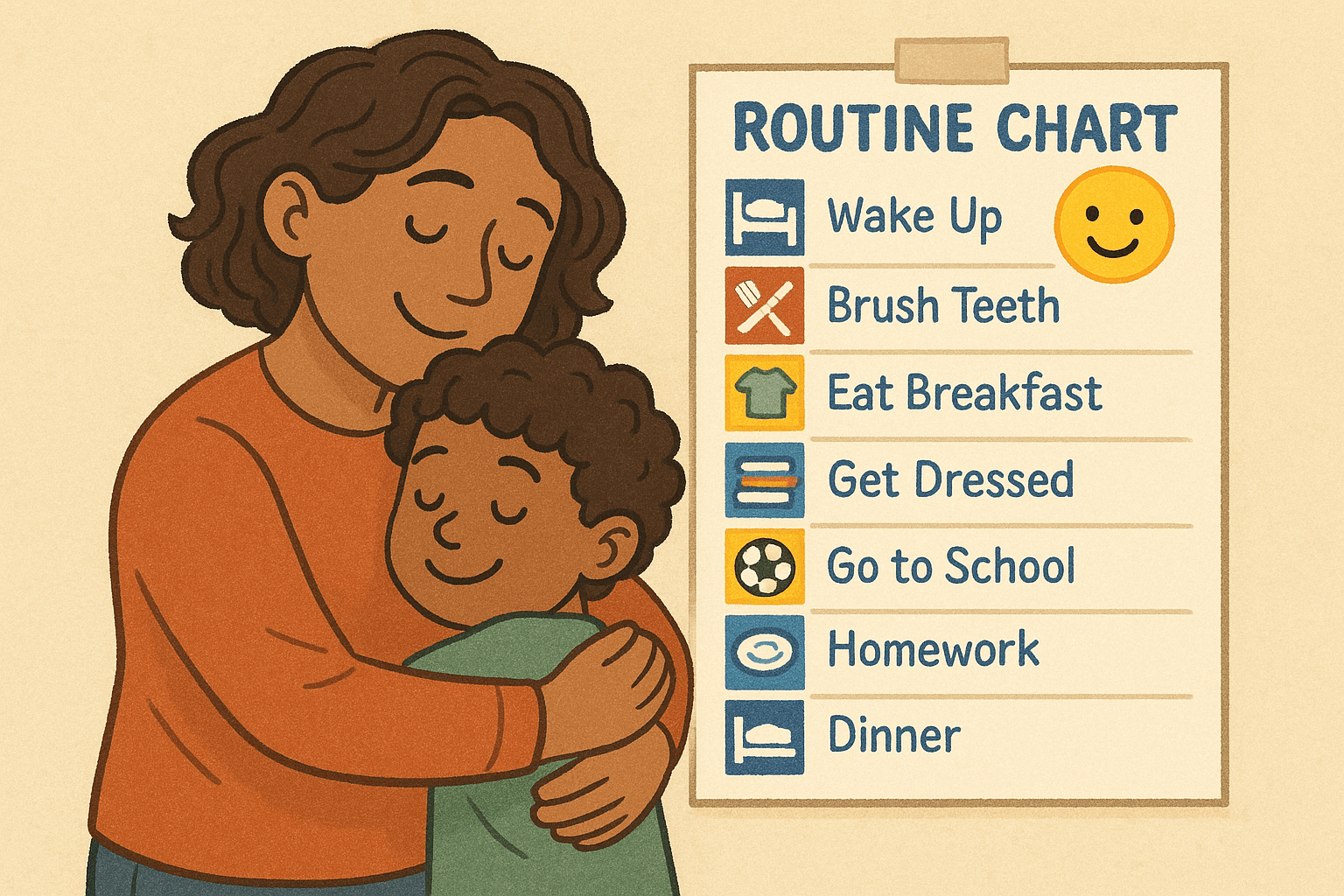
* Routine Tip: Establish a consistent 5-step bedtime routine (e.g., bath, books, cuddle, song, lights out). This predictability builds security. Encourage “problem-solving” play with blocks or dress-up.
* What to Avoid: Dismissing their fears (“That monster isn’t real!”). Instead, validate and empower (“That sounds scary. Let’s make a monster-spray bottle with water!”).
The Power of Play: It's How They Learn
Play is the serious work of childhood. Unstructured play—not screen-based or overly directed—is where children develop problem-solving, creativity, and emotional resilience. For a young child, stacking blocks is a physics lesson. Pretending to run a restaurant teaches social rules and language. Get down on the floor for 10 minutes of child-led play daily. Your phone is away, and you follow their lead. This “special time” is more valuable than any educational app.
Communication: Building Connection Beyond Words
Communication starts long before first words. It's in your gestures, tone, and attention. Narrate your day (“I’m cutting the carrots into circles”). Listen with your full presence—get to their eye level. When they speak, avoid over-correcting. If they say, “I goed there,” you can model correctly by replying, “Yes, you went there!” This builds vocabulary without criticism. For all ages, acknowledge feelings before correcting behavior: “I see you’re very angry about leaving the park. It’s hard to stop playing. Kicking the car seat isn’t safe. Let’s take a deep breath together.”
Navigating Challenges: When to Pause and When to Seek Help
All children develop at their own pace. However, trust your instincts as the expert on your child. Consider consulting a pediatrician or child development specialist if you notice persistent patterns like: no babbling by 12 months, no words by 18 months, loss of previously acquired skills at any age, extreme difficulty with transitions or social connection by age 3-4, or significant sensory sensitivities that disrupt daily life. Early support is a gift, not a failure.
Your Quick Weekly Plan for Connection
You don't need hours of extra time. Weave these into your existing week:
* Monday: 10 mins of child-led play after work/daycare.
* Tuesday: Read together before bed (every day, but be extra present today).
* Wednesday: Involve them in a simple chore (washing veggies, sorting socks).
* Thursday: Get active—dance in the kitchen, walk and notice nature.
* Friday: Connect with another family for social play.
* Saturday: Outdoor adventure or free play time.
* Sunday: Practice a calming ritual together (deep breaths, cuddles).
FAQ: Your Pressing Questions, Answered
Q: I lose my temper sometimes. Am I harming my child's development?
A: No. What matters most is the overall pattern of care and your ability to repair. After a rupture, a simple, “I’m sorry I yelled. I was frustrated, but I should not have yelled. I love you,” teaches emotional regulation and repair—a critical life skill.
Q: How much screen time is okay?
A: For children under 2, expert guidance suggests minimizing screen time (other than video calls). For older children, less is more. Prioritize interactive, creative, and physical play. When screens are used, co-view and discuss the content to make it interactive.
Q: My child seems shy and clings to me in social settings. What should I do?
A: Respect their temperament. Don’t label them “shy” or force separation. Be their secure base. Stay close, help them observe, and gently scaffold interactions (“Let’s ask Sam if we can play with that truck together”). With time and non-pressured exposure, their confidence will grow.
Your Journey Together
Parenting is not about manufacturing a specific outcome. It is about tending to the soil so the unique seed of your child can grow strong. You are not just teaching them; you are learning about them. The daily routines, the moments of connection, the patient guidance through storms—this is the work that builds a person. Take a deep breath. You have within you the most important tools already: your love, your attention, and your willingness to be their guide. Start small, be kind to yourself, and trust the journey.