The Foundation Years: A Gentle Guide to Early Learning That Lasts
Early learning isn't about flashcards or apps. It's about connection, curiosity, and the simple, powerful experiences that build a child's brain and heart for life.
Related Guides
- /blog/early-childhood-development-guide
- /blog/global-early-childhood-development-0-5
- /blog/global-baby-development-0-12-months
Forget the pressure of "getting ahead." The true magic of early childhood learning is far more profound and far simpler than many of us are led to believe. It doesn't happen in isolated lessons, but is woven into the daily fabric of loving connection, safe exploration, and joyful discovery. These years—from birth to around age five—are when the brain's architecture is built at its most rapid pace. Our role as parents isn't to be formal teachers, but to be curators of enriching environments and attentive partners in our children's innate drive to understand their world. This guide is about embracing that role with confidence, empathy, and a deep trust in the power of play, talk, and togetherness.
What Early Learning Really Means
Early learning is the holistic development of a child's cognitive, social-emotional, physical, and language capacities. It's the process of making sense of the world through every interaction. Evidence consistently shows that secure, responsive relationships are the primary catalyst for healthy brain development. Learning at this stage is integrated: a toddler stacking blocks is learning physics (balance), math (size, order), and persistence (when the tower falls). A child pretending to be a shopkeeper is learning language, social rules, empathy, and problem-solving. When we shift our view from "academic preparation" to "whole-child development," we see learning opportunities everywhere.
The Pillars of Foundational Development
Think of development as resting on four core pillars, all equally important:
1. Social-Emotional: The bedrock. This includes learning to identify and manage feelings, build secure attachments, show empathy, and play cooperatively.
2. Language & Communication: More than words, this encompasses understanding, expression, nonverbal cues, and the back-and-forth of conversation.
3. Cognitive: This involves thinking, reasoning, problem-solving, and understanding concepts like cause-and-effect, patterns, and early numeracy.
4. Physical & Motor: Both gross motor (running, climbing) and fine motor (grasping, scribbling) skills that enable exploration and independence.
Age-Banded Insights: What Learning Looks Like
Infants (0-12 months)
Learning is sensory and relational. Focus on: Responsive care (cuddling, feeding, soothing), "serve-and-return" conversations (cooing back), tummy time, safe spaces to roll and reach, reading simple board books, and describing what you're doing. Tip: Narrate your day. "I'm warming up your milk. It feels warm on my hand."
Toddlers (1-3 years)
Learning is exploratory and physical. Focus on: Safe environments to climb and move, simple puzzles, stacking toys, pretend play with dolls or cars, lots of naming objects and feelings, short songs and rhymes, helping with simple tasks (putting clothes in a basket). Tip: Offer choices between two options to foster autonomy. "Do you want the red cup or the blue cup?"
Preschoolers (3-5 years)
Learning is imaginative and inquiry-based. Focus on: Complex pretend play scenarios, more detailed stories and questions, counting objects in daily life, simple cooking activities, drawing and early writing attempts, nature walks with observation, board games about taking turns. Tip: Expand on their questions. If they say, "Look, a big truck!" you can add, "It is huge! I wonder what it's carrying. It has so many wheels to hold all that weight."
The Power of Purposeful Routine
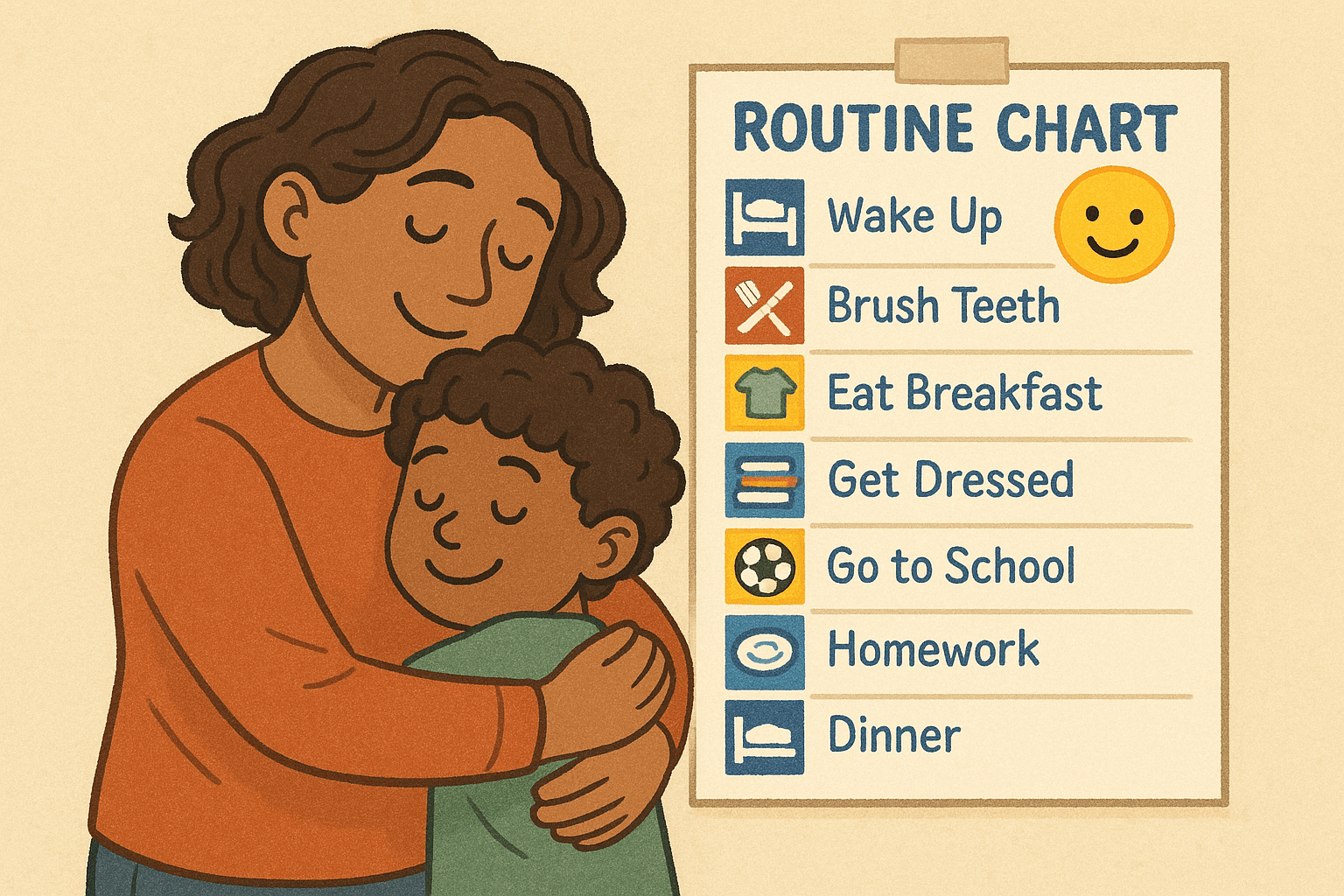
Routines provide the predictable security that frees a child's mind to learn. Within that structure, infuse intentional learning moments.
- Morning: "Let's count how many steps to the bathroom." Sing a dressing song.
- Mealtime: Talk about colors, textures, and tastes. Let them help pour or stir.
- Errands: Describe what you see at the market. Group items ("All the fruits go here").
- Bath time: Experiment with what floats and sinks. Practice pouring.
- Bedtime: Read stories, talk about the day's highs and lows, predict what tomorrow might bring.
What to Avoid: Common Well-Intentioned Pitfalls
1. Avoid Over-Scheduling: Young children need ample unstructured time for free play, which is essential for creativity and self-regulation.
2. Avoid Screen-Based "Learning" as a Substitute: For children under 2, expert guidelines discourage non-video-chat screen use. For older preschoolers, prioritize interactive, real-world experiences.
3. Avoid Correcting Play: If your child calls a block a "car," join their imagination. Correcting them stifles creativity. The focus is on process, not perfect product.
4. Avoid Pressured Academic Drills: Forcing letter flashcards before a child shows interest can create anxiety. Introduce letters and numbers naturally through environmental print (street signs, cereal boxes) and play.
5. Avoid Comparing: Each child's developmental path is unique. Milestones are guides, not strict deadlines.
A Quick Weekly Plan for Balanced Learning
This is a flexible framework, not a checklist. Follow your child's lead.
- Monday (Move Day): Extended outdoor play at a park, dance party indoors, obstacle course with cushions.
- Tuesday (Make Day): Simple art with crayons/paint, play-dough, or building with recyclables.
- Wednesday (Word Day): Library visit, extra story time, act out a favorite book.
- Thursday (Think Day): Simple puzzles, sorting toys by color/size, cooking together (measuring, pouring).
- Friday (Friend/Feelings Day): Playdate (or focused family play), talk about emotions using books or dolls, practice taking turns.
- Weekend (Wonder Day): Nature walk, visit a farmer's market, museum, or just explore the backyard with a magnifying glass.
When to Seek Guidance
While development varies, trust your instincts. Consider consulting a pediatrician or early childhood specialist if you have persistent concerns about: limited eye contact or social smiling by 6 months; no babbling by 12 months; no single words by 16 months; no two-word phrases by 24 months; persistent loss of previously gained skills; significant sensory aversions; or extreme difficulty with transitions or play. Early, supportive intervention is powerful.
FAQ: Your Early Learning Questions, Answered
Q: My child isn't interested in letters/numbers. Should I be worried?
A: Not at all. Early learning encompasses so much more. Focus on building their vocabulary, narrative skills (telling a simple story), and logical thinking through play. A child who builds a complex block tower is doing advanced math and physics. Interest in symbols typically blossoms between 3-5, and will emerge naturally when you point them out in everyday contexts.
Q: How much should I be "teaching" versus just letting them play?
A: Your role is to be a "guide on the side," not a "sage on the stage." Set up a stimulating environment, be present, and join their play when invited. The most powerful teaching moments are unscripted—answering their questions, adding a new word during play, or helping them navigate a social conflict. Play *is* their work.
Q: I'm not a "crafty" or "musical" parent. Does that disadvantage my child?
A: Absolutely not. Your unique strengths are what your child needs most. Are you a great storyteller? A nature lover? A calm problem-solver? A cuddler? Share *what you love*. Authentic engagement is infinitely more valuable than forced performances. Put on music you enjoy and move; it doesn't have to be "kids' music."
Your Next Step: Observe and Connect
The most impactful action you can take today is to simply observe your child with curiosity for 10 minutes. What are they drawn to? What problem are they trying to solve in their play? Then, get down on their level and join in—without directing. Comment on what they're doing ("You're working so hard to balance that!").
The goal of the early years is not to fill a bucket with facts, but to ignite a lifelong fire for learning. That fire is lit by warmth, security, and the shared joy of discovery. You already have everything you need to nurture it.