From Homework to Harmony: Practical Parenting Tips for School Success
A child's school journey is a shared endeavor. This guide offers evidence-informed, empathetic strategies to build strong foundations, navigate challenges, and foster a lifelong love of learning—without the pressure.

Your child's school years are a profound journey, not just for them, but for your entire family. It's a path paved with triumphs, occasional frustrations, moments of wonder, and the quiet, steady work of growth. As parents, our role isn't to be the substitute teacher or the homework enforcer, but rather the architects of a supportive environment and the guides who help our children navigate the complexities of learning and social life. Success here isn't defined by a perfect report card, but by a child who feels capable, curious, and connected. This guide offers practical, evidence-informed strategies to build that foundation, reduce household stress, and make the school journey a more harmonious partnership.
Laying the Foundation: The Power of Routine and Environment
A predictable structure is the scaffolding upon which a child's sense of security and competence is built. It reduces anxiety (the "what comes next?" worry) and frees up mental energy for learning.
* The Evening & Morning Rhythm: Aim for consistency. A calm evening routine (e.g., bath, 10 minutes of reading together, lights out) is more crucial than a frantic morning. Prepare backpacks, lunches, and clothes the night before. In the morning, focus on connection—a warm greeting, a nutritious breakfast—rather than nagging.
* The Homework "Zone": Create a dedicated, well-lit space that is as distraction-free as possible. For younger children, this might be at the kitchen table while you prepare dinner. For older ones, a quiet desk in a common area often works better than isolation in their room. Stock it with basic supplies to avoid procrastination searches.
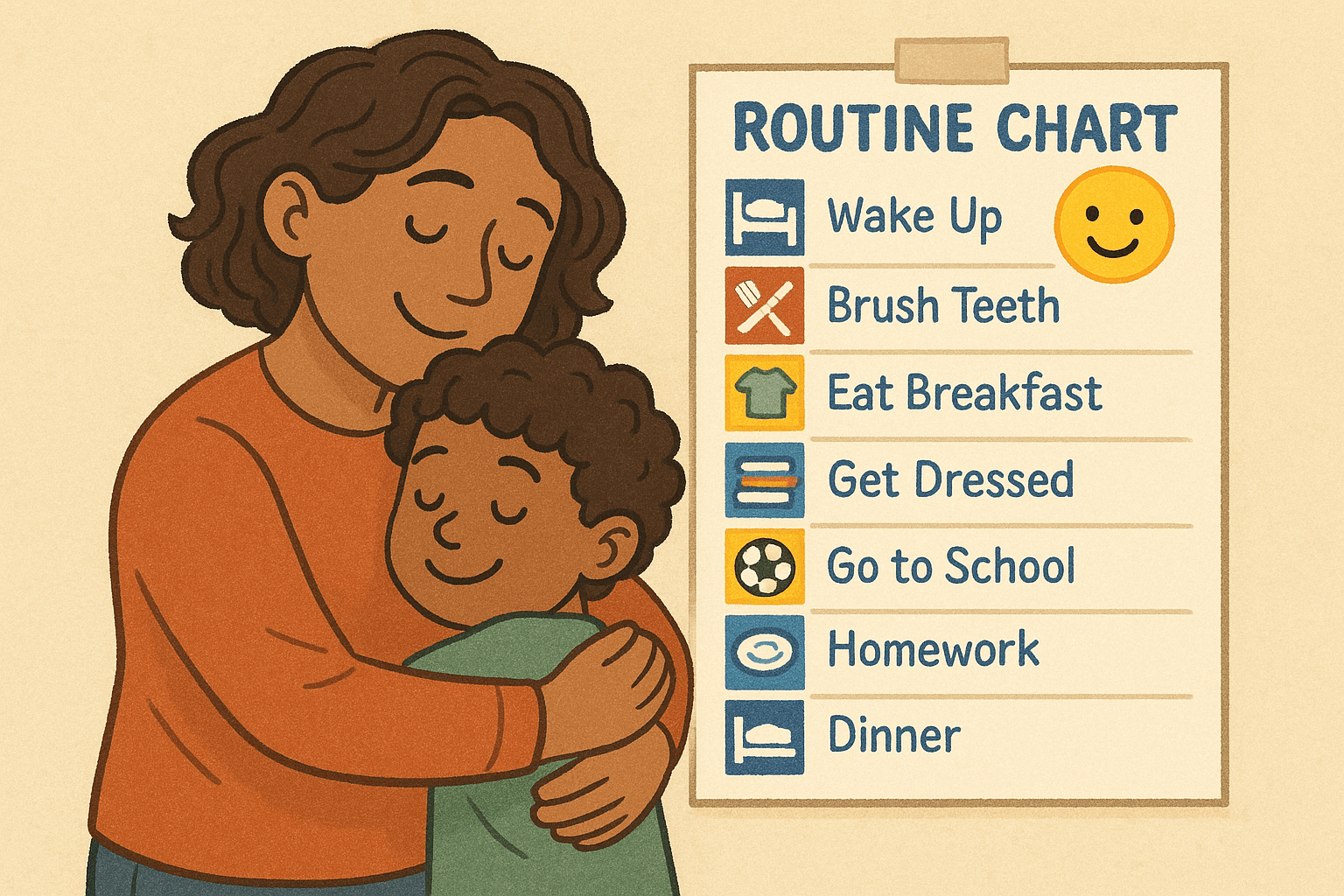
* Age-Banded Tip: Primary (5-8): Keep routines visual with a picture chart. Tween (9-12): Involve them in designing their homework space. Teen (13+): Respect their need for autonomy (like listening to music while working) while agreeing on core "screen-free" work times.
Engaging as a Partner, Not a Project Manager
Your attitude towards school shapes your child's. Shift from monitoring to mentoring.
* Ask Better Questions: Move beyond "How was school?" (Fine.) Try specific, open-ended prompts: "What's something that made you think hard today?" "Tell me about a conversation you had at lunch." "Did anyone need help with something?"
* Focus on Process, Not Just Product: Praise effort, strategy, and perseverance. "I saw you working on that math problem three different ways—that's creative problem-solving!" This builds a *growth mindset*.
* Partner with Teachers: Attend conferences with a collaborative spirit. Come with observations ("She gets frustrated with writing at home") and questions ("What strategies work for her in class?"). This builds a united front for your child's benefit.
Navigating the Homework Hurdle
Homework is often the biggest flashpoint. Your goal is to move from being a source of pressure to a source of support.
* Be a Consultant, Not a Corrector: Your role is to help them understand instructions, brainstorm approaches, and check for completeness—not to do it for them or guarantee it's error-free. Mistakes are how teachers gauge understanding.
* Use the "When-Then" Strategy: "*When* your homework is done, *then* you can have screen time." This motivates and provides a clear structure.
* What to Avoid: The nightly battle. If frustration peaks (for you or them), take a mandated 10-minute break. Never tie your affection or their worth to homework performance.
* Quick Weekly Plan:
* Mon/Tue: Tackle the hardest subject first when energy is highest.
* Wed: Mid-week check-in. "How's the week feeling? Anything big coming up?"
* Thu: Focus on longer-term projects (little by little).
* Fri: Light review or reading; a chance to unwind.
* Weekend: Designate a short, consistent window (e.g., Sunday afternoon) for weekly review and prep, then protect the rest as family time.
Cultivating Social-Emotional Skills
School is a child's first complex social ecosystem. Academic learning is intertwined with social learning.
* Coach, Don't Rescue: When they face friendship issues, avoid immediately calling the other parent. Instead, listen empathetically and ask coaching questions: "What have you tried? How did that feel? What's another idea?" This builds their conflict-resolution toolkit.
* Name the Emotions: Help them label what they're feeling—"It sounds like you felt embarrassed when you couldn't answer in class." Validating feelings (".") is the first step to managing them.
* Age-Banded Tip: Primary: Role-play how to ask to join a game. Tween: Discuss peer pressure and digital citizenship. Teen: Be a sounding board for more complex social dynamics; avoid dismissive "drama" labels.
When Challenges Arise: Reading the Signals
If you're wondering "what should I do?" about a persistent issue, the first step is detective work.
* Is it academic? Look for patterns. Is it one subject or all? Is it a lack of understanding, a focus challenge, or test anxiety?
* Is it social/emotional? Are there changes in mood, friendship groups, or a reluctance to go to school? Is the work itself fine, but the context is hard?
* Is it about fit or environment? Does the teaching style match their learning style? Are sensory needs (noise, lighting) being met?
* When to Seek Help: If challenges are severe, persistent over 6-8 weeks, or significantly impact their well-being or functioning, seek out your teacher, school counselor, or a child psychologist. Early, collaborative intervention is key.
Fostering the Bigger Picture: A Love of Learning
Protect your child's innate curiosity from being overshadowed by the mechanics of school.
* Connect Learning to Life: Link fractions to cooking. Discuss history during a movie. Visit museums, libraries, and nature centers just for fun.
* Model Lifelong Learning: Let them see you read for pleasure, take a class, or struggle with learning a new skill. Talk about it.
* Embrace Downtime: Unstructured play, boredom, and daydreaming are not wasted time; they are essential for creativity, problem-solving, and mental integration.
What to Avoid: Common Pitfalls That Undermine Your Goals
1. Over-Scheduling: A calendar packed with enrichment activities leads to burnout for everyone. Protect free time.
2. Comparing Siblings or Peers: "Why can't you be more like your sister?" breeds resentment, not motivation.
3. Tying Allowance or Rewards to Grades: This can undermine intrinsic motivation and make learning transactional.
4. Venting About School or Teachers in Front of Your Child: It undermines their respect for the institution and can give them an "out" for their own effort.
5. Doing Their Work: It sends the message: "You can't do this, so I will." It also deprives the teacher of accurate feedback.
Frequently Asked Questions
Q: My child refuses to do homework. What now?
A: First, stay calm and seek to understand. Is it too hard? Too boring? Are they overwhelmed? Remove the audience (you) by stating the expectation calmly: "Homework is your responsibility to complete. I'm here if you need help understanding the instructions." Then, disengage from the power struggle. Let the natural consequences at school (e.g., an unfinished note from the teacher) be the teacher. Consistently enforce your home routines (no screens until it's done). If refusal is chronic, a collaborative meeting with the teacher is essential.
Q: How much should I help with a big project?
A: Your role is project manager, not hands-on labor. Help them break the project into smaller, manageable tasks on a calendar. Guide them to resources. Teach them how to create a bibliography. Provide materials and encouragement. The thinking, writing, and creating must be theirs. It's okay if it's not perfect; it's more important that it's authentic.
Q: My child is a perfectionist and gets stressed over minor mistakes. How can I help?
A: This often stems from a fear of failure or fixed mindset. Model making mistakes gracefully yourself ("Oops, I burned the toast! Oh well, let's try again."). Share stories of famous people who failed repeatedly. Praise effort and strategy relentlessly, not just perfect outcomes. Shift language from "This is perfect" to "I can see how much care you put into this." If anxiety is severe and impacting their health, consider speaking to a child therapist.
Your Next Step: The One-Week Observation
Before overhauling everything, simply observe for one week. Without judgment, note the friction points: Is it the morning rush? The homework meltdown at 7 PM? The Sunday night dread? Pick the one area causing the most stress for your family and implement one small change from this guide. Lasting change is built slowly, with empathy and consistency. Your steady presence as their guide, cheerleader, and safe harbor is the most powerful educational tool of all.