The Compass Within: Navigating Your Child's Unique Developmental Journey
Child development isn't a race to a finish line; it's a journey of unfolding. This guide moves beyond milestones to help you become the calm, confident, and connected guide your child needs, rooted in understanding and everyday moments.
As parents, we often feel handed a map—a chart of milestones with ages neatly attached. We anxiously watch, wondering if our child is "on track." But what if the real map isn't on paper? What if it's in the daily moments of connection, the spark of curiosity in your child's eyes, and your own intuitive understanding of their unique spirit? Child development is less about checking boxes and more about nurturing the natural, sometimes messy, always miraculous process of a human being coming into their own.
This guide is not another list of benchmarks. It's a shift in perspective—from observer to engaged guide, from worrier to empowered supporter. We'll explore practical, evidence-informed ways to build a supportive environment that allows your child's innate potential to flourish, all within the beautiful, complex context of our homes, families, and culture.
1. Understanding the Whole Child: The Five Domains of Development
Think of development as a braided rope, with five essential strands intertwined. A delay or strength in one area affects the others.
* Physical: Gross motor (running, jumping) and fine motor (picking up a raisin, scribbling).
* Cognitive: Thinking, learning, problem-solving (figuring out a shape sorter).
* Speech & Language: Understanding words (receptive) and communicating back (expressive).
* Social-Emotional: Forming relationships, understanding feelings, self-regulation.
* Adaptive/Self-Help: Daily skills like feeding, dressing, and toileting.
Age-Banded Insight:
* 1-2 Years: Don't worry if speech is emerging slowly if your child is pointing, understanding commands, and connecting with you through gestures and smiles. Focus on the social strand.
* 3-5 Years: A child might be physically agile but struggle to take turns. That's a social-emotional focus. Playdates are practice, not just play.
2. Your Role: The Connected Guide, Not the Director
Your most powerful tool is your relationship. Secure attachment—the feeling that you are a safe base—is the foundation for all exploration and learning.
* Practice: "Serve and Return." When your baby coos, coo back. When your toddler points at a bird, say, "Yes, I see the bird!" This builds neural pathways.
* Example: At mealtime, be present. Talk about the food's texture and color. Make eye contact, not just feeding. This integrates physical, cognitive, and social domains.
* What to Avoid: Constant screen-based distraction during interactions. A phone in your hand during playtime sends a message that the virtual world is more engaging than them.
3. Play: The Serious Work of Childhood
Play is not a break from learning; it *is* learning. Through play, children learn to negotiate, imagine, experiment, and master skills.
* Structured Play (Ages 3+): A simple board game like "Snakes and Ladders" teaches turn-taking, counting, and handling disappointment.
* Unstructured Play (All Ages): This is crucial. Give them time with everyday items. Let a toddler stack plastic cups. Let a preschooler build a fort with bedsheets. The boredom sparks creativity.
* Cultural Twist: Traditional games like "Pittu" or "Lagori" are fantastic for physical coordination, teamwork, and social rules.
4. Communication: Building Bridges with Words and Feelings
Language development is about connection before correction.
* Infants & Toddlers: Narrate your day. "Mummy is cutting vegetables. See the red tomato?" Expand on their words. If they say "car," you say, "Yes, a big blue car is going fast!"
* Preschoolers: Use feeling words. "It looks like you're feeling frustrated because the block tower fell. That's okay. We can build it again." This builds emotional literacy.
* What to Avoid: Baby talk beyond infancy. Use simple, correct words. Also, avoid overwhelming them with constant chatter or corrections. Pause and listen.
5. Routines & Rituals: The Security of Predictability
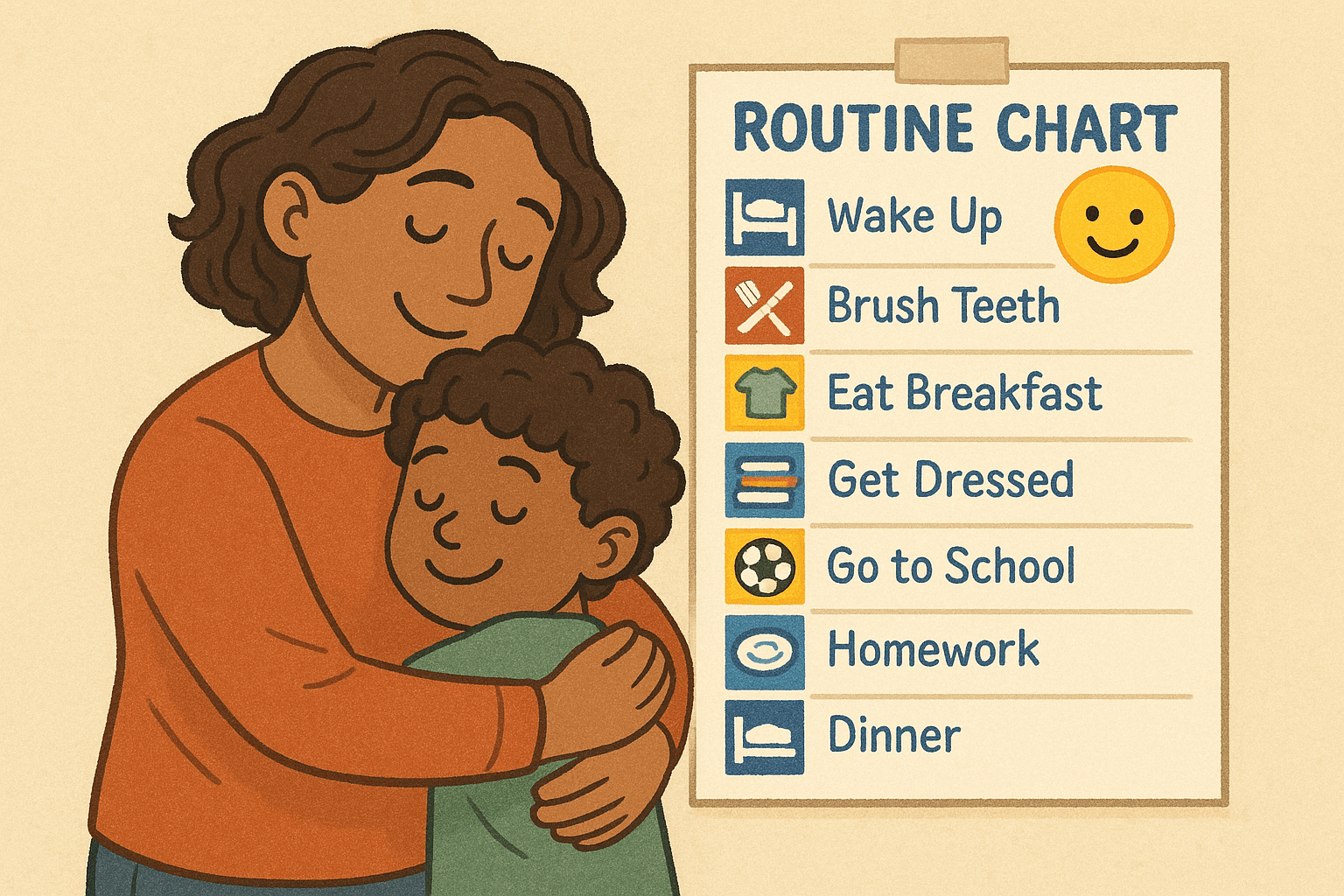
In a world full of unknowns, routines provide a safe, predictable structure. They reduce anxiety and power struggles.
* Key Routines:
1. Morning Connection: A 5-minute cuddle or chat before the day's rush.
2. Mealtime Together: Even if it's just one meal, aim for screens-off family time.
3. Bedtime Wind-Down: A consistent sequence—bath, story, song, lights out—signals safety and sleep.
* Example Bedtime: Bath (physical), 1 story (cognitive/language), 2 songs (connection), goodnight kiss. Keep it calm and consistent.
6. Navigating Concerns: When to Observe, When to Seek Help
Every child develops at their own pace. However, professional guidance is crucial when needed.
* Observe: If a skill is emerging slowly but progressing, and your child is engaged and connected, provide more opportunities for practice.
* Seek Help: If you notice consistent absence of skills expected for their age, significant loss of skills they once had, or extreme difficulty connecting or communicating compared to peers.
* Professional Pathways: Start with your paediatrician. They may refer you to a child psychologist, developmental paediatrician, speech therapist, or occupational therapist. Early intervention is key.
> A Note on Support: For children with specific developmental needs, government schemes like the Unique Disability ID (UDID) card can facilitate access to benefits, concessions, and streamlined services. Consulting with your paediatrician or a specialist can help you understand if this is a relevant step for your family's journey.
7. Your Quick Weekly Connection Plan
Aim for small, daily investments, not perfect, marathon sessions.
* Monday: 15 mins of uninterrupted play—you follow their lead.
* Tuesday: Cook something simple together (measuring, pouring).
* Wednesday: Outdoor play—park, walk, just notice clouds.
* Thursday: Read a book and talk about the pictures, not just the words.
* Friday: Family music time—sing, dance, make noise with pots!
* Saturday: Involve them in a simple chore (folding laundry, sorting spoons).
* Sunday: Quiet connection—puzzle, cuddle, reminiscing about the week.
8. The Inner Work: Managing Your Own Anxiety
Your calm is your child's calm. Their development is not a reflection of your worth as a parent.
* Practice: When worry arises, pause. Breathe. Differentiate between a "google scare" and your genuine intuition.
* Connect: Find a trusted parent friend to share realities, not just highlights.
* What to Avoid: Constant comparison with other children, especially on social media. You are seeing their highlight reel, not their daily development.
FAQ: Common Questions from Parents
Q: My 2.5-year-old isn't speaking in full sentences like their cousin. Should I be worried?
A: Language explosion happens at different times. Focus on understanding: Do they follow simple instructions? Do they use gestures or single words to communicate? If yes, and they are socially engaged, enrich their environment with conversation and reading. If there's very little attempt to communicate or understand by 2, consult your paediatrician for a hearing check and guidance.
Q: My child has huge tantrums. Am I failing at discipline?
A: Tantrums are often a sign of overwhelmed feelings, not bad behaviour. Your role is to be the calm anchor, not to escalate. Ensure safety, stay nearby, and label the feeling after the peak passes ("You were very angry because we had to leave the park"). Consistency in routines also prevents many tantrums.
Q: How much screen time is okay?
A: For under 2, aim for minimal to none (except video calls). For 2-5, less than 1 hour of high-quality, co-viewed content is recommended. Screens are not a babysitter; they replace the active, hands-on play and interaction crucial for brain development. Prioritise real-world exploration.
Your Journey Forward
You are not just raising a child; you are nurturing a person. This journey asks for your presence more than your perfection. Trust the bond you are building. Celebrate the tiny, unseen steps as much as the big, celebrated milestones. When in doubt, return to connection—a hug, a moment of shared laughter, a quiet story. That connection is the true compass, for them and for you.
Start small this week. Choose one strand of development you want to gently support. Choose one routine to soften and connect. Observe without judgment. You are your child's first and most important world. Build that world with love, awareness, and the confidence that you are enough.