Homeschooling Your Child: A Practical Guide for Creating Meaningful Learning at Home
Homeschooling is more than just replicating school at home—it's about creating a personalized, holistic learning environment that nurtures your child's unique potential. This guide offers practical strategies, age-specific approaches, and compassionate insights for Indian families embarking on this educational journey.

When you first consider homeschooling, it's natural to feel a mix of excitement and apprehension. You might picture yourself standing before a whiteboard, trying to replicate the classroom experience, or worry about whether you're qualified to teach your own child. Let's reframe that thinking right away: homeschooling isn't about becoming a professional teacher overnight. It's about creating a rich learning environment that aligns with your family's values, your child's natural curiosity, and the realities of your daily life. In the Indian context, where education often carries tremendous weight, this journey becomes about balancing academic rigor with emotional well-being, cultural connection with global awareness.
Understanding Your Why: The Foundation of Your Homeschool Journey
Before purchasing a single textbook or designing a schedule, pause and reflect on your family's "why." Are you seeking more flexibility than traditional schools offer? Do you want to incorporate more Indian languages, arts, or values into daily learning? Is your child struggling in conventional settings? Perhaps you want to nurture a particular talent or accommodate special learning needs. Your "why" will shape every decision—from curriculum choices to daily rhythms. Write it down. Revisit it when challenges arise. This clarity becomes your compass when doubts surface.
What to Do First: Your Practical Starting Point
1. Observe and Connect: Spend a week simply noticing your child's natural rhythms. When are they most alert? What genuinely captures their attention? Do they learn better through stories, hands-on activities, or visual demonstrations?
2. Understand Legal Requirements: Research your state's education board guidelines for homeschooling in India. Requirements vary, but most involve submitting a declaration and maintaining basic records of learning progress.
3. Start Small, Not Perfect: Begin with one or two core subjects—typically language and mathematics—and gradually build from there. A common mistake is trying to implement a complete school schedule from day one.
4. Connect with Community: Seek out local or online homeschooling groups. Other families can offer invaluable support, resource recommendations, and social opportunities for your child.
Designing Your Learning Environment: Beyond Four Walls
Your home doesn't need a dedicated classroom. Learning happens everywhere:
- The Kitchen: Measuring ingredients teaches fractions; discussing food origins connects to geography and biology.
- The Living Room: Family reading time builds language skills; documentaries spark historical discussions.
- Outdoor Spaces: Nature walks become biology lessons; local markets teach economics and social studies.
Create "learning stations" with accessible materials: a reading nook with books at various levels, an art corner with recycled materials, a math shelf with manipulatives like measuring tapes and kitchen scales. For many Indian homes with limited space, a simple rolling cart or designated shelf can serve this purpose beautifully.
Age-Banded Approaches: Meeting Developmental Needs
Early Years (3-6 years)
Focus on play-based learning, sensory experiences, and developing foundational skills through stories, songs, and hands-on activities. Incorporate Indian folktales, regional language exposure, and simple daily rituals like helping with meal preparation. Keep structured "lessons" brief (15-20 minutes).
Primary Years (6-10 years)
Build strong literacy and numeracy foundations while exploring interests. Blend textbook work with project-based learning—like creating a family tree that explores regional history or designing a simple budget for a pretend shop. Introduce basic concepts in both English and your mother tongue.
Middle Years (10-14 years)
Support growing independence with guided research projects, deeper dives into subjects of passion, and real-world applications. A child interested in cricket might calculate averages (math), research its history (social studies), and write match reports (language). Encourage participation in local workshops or online courses aligned with Indian educational standards.
Teen Years (14-18 years)
Shift toward mentorship and preparation for future paths. Facilitate internships, online certifications, and community projects. Help them connect their learning to career explorations, whether through traditional higher education, vocational training, or entrepreneurship. Ensure they meet requirements for Indian board examinations if pursuing formal certifications.
Building Consistency: The Rhythm Over Routine Approach
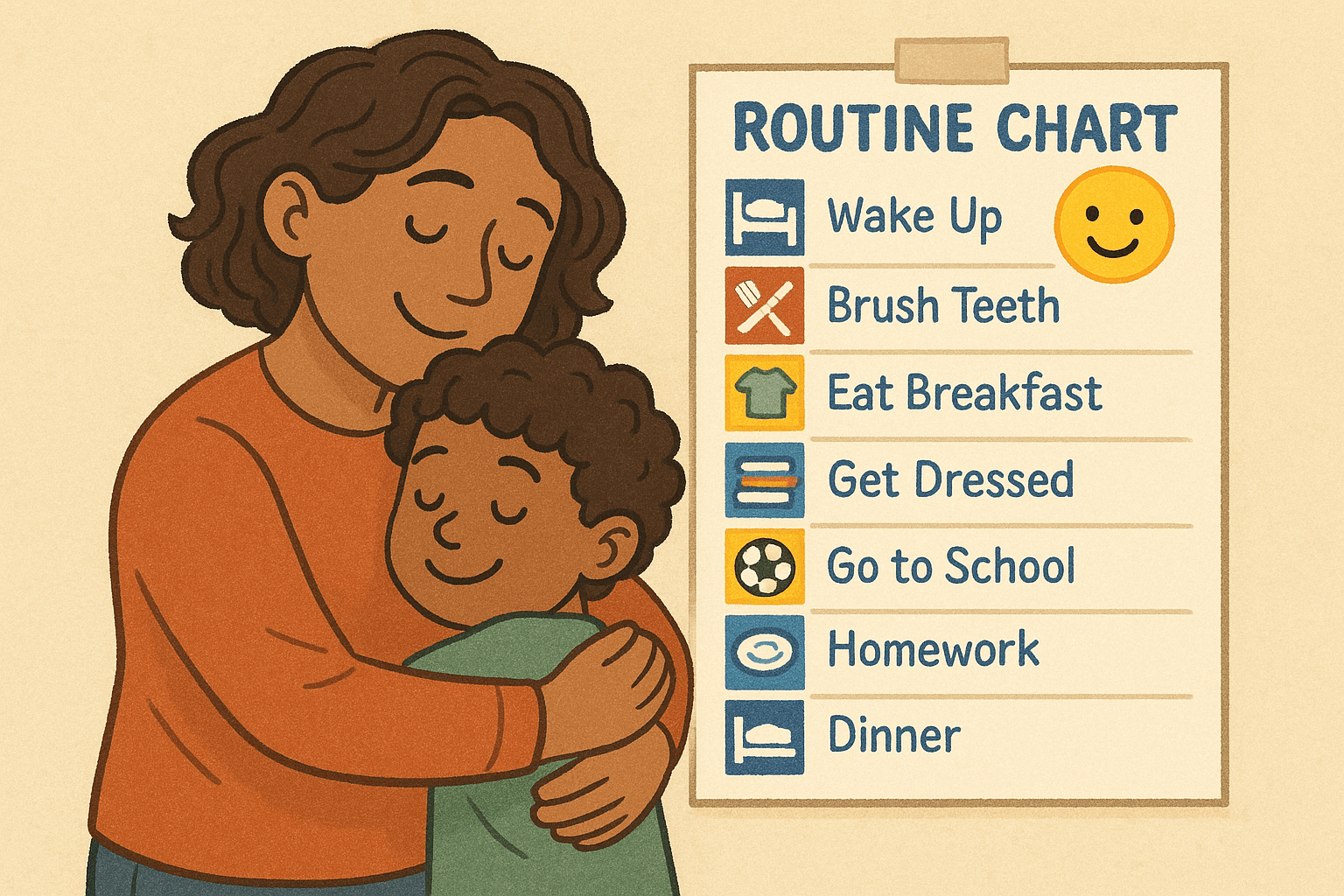
Consistency matters more than rigid schedules. Create a predictable rhythm that flows with your family's life:
- Morning Circle (15 minutes): Share plans, read a poem, discuss current events
- Focused Learning Time (90-120 minutes): Core academic work
- Creative/Physical Time (60 minutes): Arts, music, sports
- Independent Exploration (60 minutes): Child-directed projects
- Family Connection (30 minutes): Cooking together, discussing the day
Remember that many Indian families have joint family structures or multiple caregivers. Involve grandparents in storytelling, aunts/uncles in skill-sharing, and create a shared responsibility chart.
A Quick Weekly Plan Template
Monday: Language focus + Science experiment
Tuesday: Mathematics + Art/craft connected to culture
Wednesday: Project day (child-led research on a topic)
Thursday: Social studies + Physical activity
Friday: Review week's learning + Field trip/virtual tour
Weekend: Family time, community activities, free play
Adjust based on energy levels—some children thrive with math in the morning, others need creative activities first. Include regular breaks and movement.
What to Avoid: Common Homeschooling Pitfalls
1. Replicating School at Home: Don't try to conduct six-hour classroom days. Home learning is more efficient and integrated.
2. Comparing Constantly: Every child's journey is unique. Avoid comparing progress with cousins or neighbors in traditional schools.
3. Neglecting Social Connections: Proactively create opportunities for interaction through hobby classes, sports teams, or homeschool meet-ups.
4. Burning Out as Parent: Schedule your own breaks. You cannot pour from an empty cup.
5. Ignoring Documentation: Maintain a simple portfolio of your child's work, even if not strictly required. It helps track progress and can be valuable for future educational transitions.
When to Seek Additional Support
If your child shows persistent difficulties with reading, writing, or mathematical concepts despite targeted help, consider consulting an educational psychologist or learning specialist. Similarly, if you notice significant social withdrawal or emotional distress, professional guidance can be invaluable. Many Indian cities now have specialists who understand homeschooling contexts.
Frequently Asked Questions
Q: Will my child fall behind compared to school-going peers?
A: Learning isn't a race with a single finish line. Homeschooled children often develop deep mastery in areas of interest while covering required material at their own pace. Many studies show homeschoolers perform comparably or better on standardized tests when they choose to take them. Focus on your child's continuous progress rather than grade-level comparisons.
Q: How do I handle subjects I'm not confident teaching?
A: You don't need to be an expert in everything. Utilize high-quality online resources, co-op classes with other families where parents share expertise, or specialized tutors for challenging subjects. Many Indian educational platforms offer excellent subject-specific courses in multiple languages.
Q: What about socialization without school?
A: Socialization happens through diverse interactions—not just same-age peers. Homeschooled children often engage with mixed-age groups in community settings, extracurricular activities, and family networks. They learn to communicate with people of different ages and backgrounds, which many parents consider an advantage.
Your Next Step: Begin with Curiosity
Start tomorrow not with a full curriculum, but with one intentional learning moment. Read a story together and discuss it. Cook a recipe while talking about measurements and food sources. Visit a local monument and explore its history. Document what happens. Notice what sparks your child's interest. Homeschooling unfolds gradually, through small, consistent steps that honor both your child's development and your family's unique culture. You have within you everything needed to create a meaningful learning journey—one that nurtures not just academic growth, but character, curiosity, and connection.
Remember: This isn't about perfection. It's about presence. It's about creating a learning life, not just delivering lessons.