Learning Math Through Play: Making Numbers Fun
Transform math anxiety into math joy with these playful approaches to introducing numerical concepts.
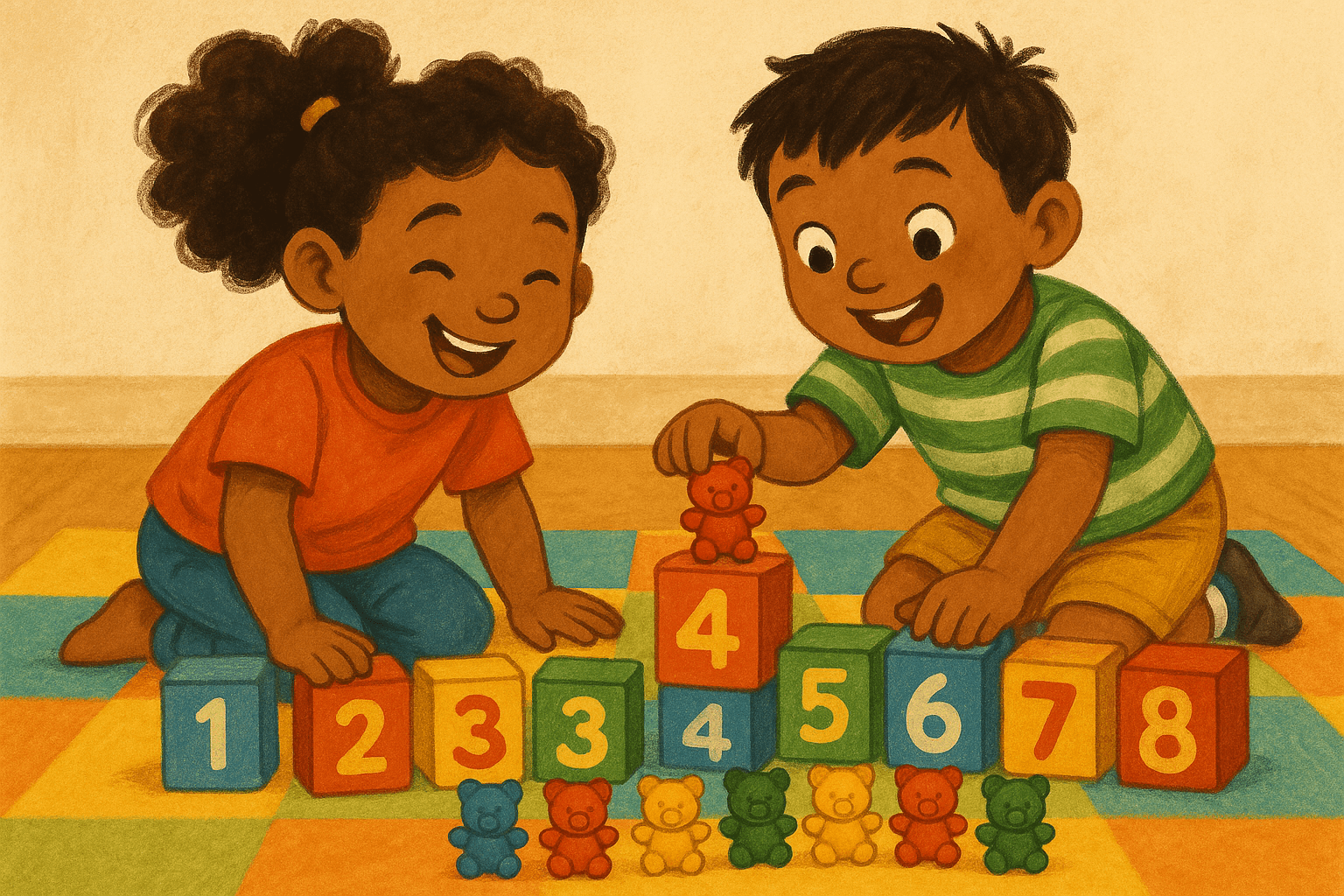
Mathematics doesn't have to be intimidating for young learners. When we introduce math concepts through play, children naturally develop number sense and mathematical thinking.
Why Play-Based Math Works
Children learn best when they're engaged and having fun. Play-based math activities:
- Build confidence and positive attitudes toward math
- Develop problem-solving skills naturally
- Make abstract concepts concrete and understandable
Counting Games and Activities
Start with simple counting activities:
- Count steps while walking
- Count toys during cleanup
- Use counting songs and rhymes
- Play hide-and-seek with numbers
Shape and Pattern Recognition
Help children notice shapes and patterns in their environment:
- Go on shape hunts around the house
- Create patterns with blocks or beads
- Draw shapes in sand or with chalk
- Build with geometric blocks
Measurement Through Play
Introduce measurement concepts naturally:
- Compare sizes of toys and objects
- Measure ingredients while cooking
- Use non-standard units (hand spans, footsteps)
- Explore weight with a simple balance
Number Recognition Activities
Make numbers meaningful and fun:
- Point out numbers in everyday life
- Play number matching games
- Use number songs and rhymes
- Create number art projects
Simple Addition and Subtraction
Introduce basic operations through play:
- Add and subtract toys during play
- Use counting bears or blocks
- Play simple board games
- Create story problems with toys
Math in Daily Routines
Incorporate math into everyday activities:
- Setting the table (counting plates)
- Sorting laundry (matching socks)
- Cooking (measuring ingredients)
- Shopping (counting items)
Building Math Confidence
Focus on effort and problem-solving rather than speed:
- Celebrate creative solutions
- Encourage multiple approaches
- Make mistakes learning opportunities
- Keep activities age-appropriate
Remember, the goal is to build a positive relationship with math that will last a lifetime.