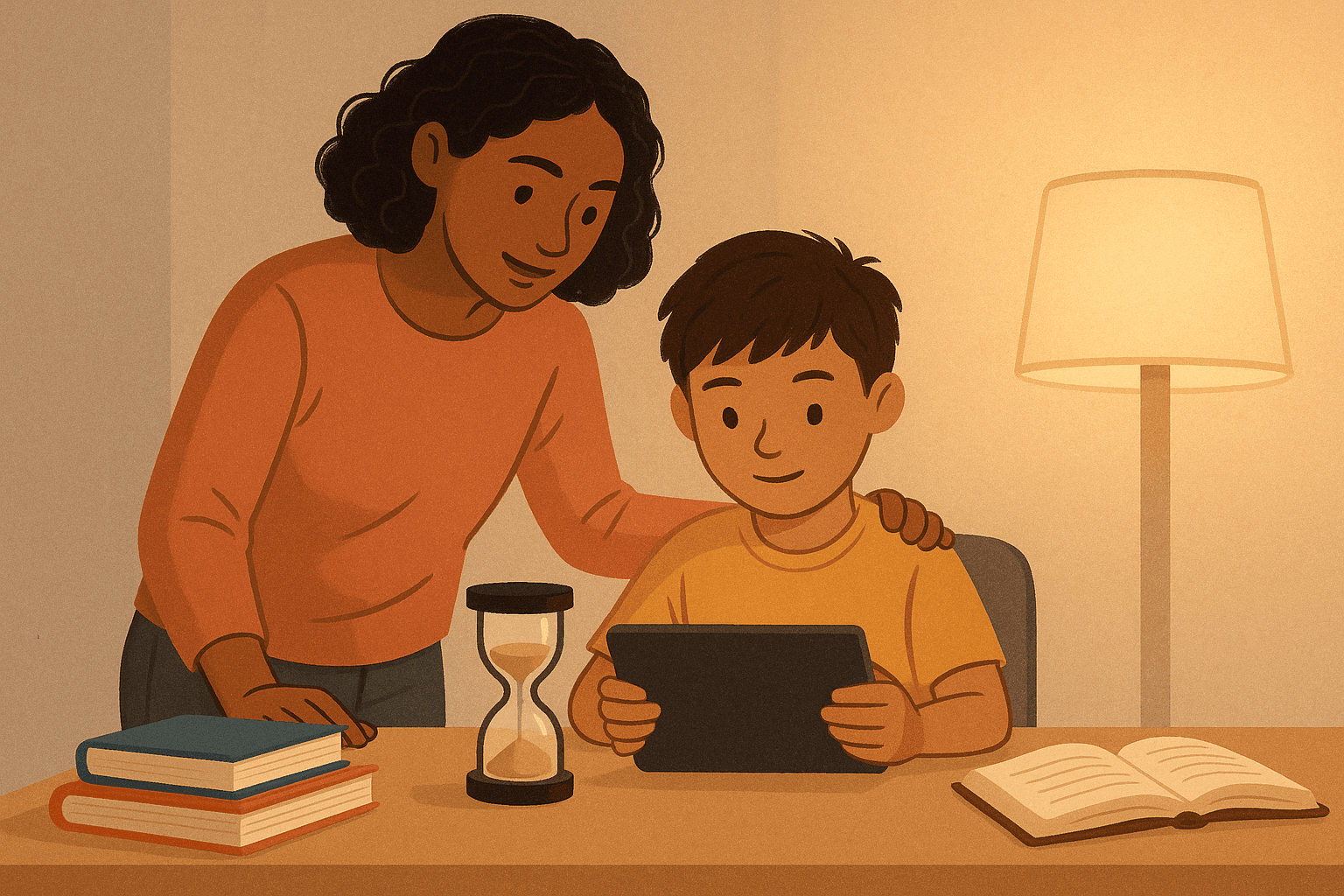
Screen Time vs. Story Time: Finding the Right Balance
Simple, science-informed habits parents can use daily to build language, memory, focus, and emotional growth in young children—without pressure or expensive tools.
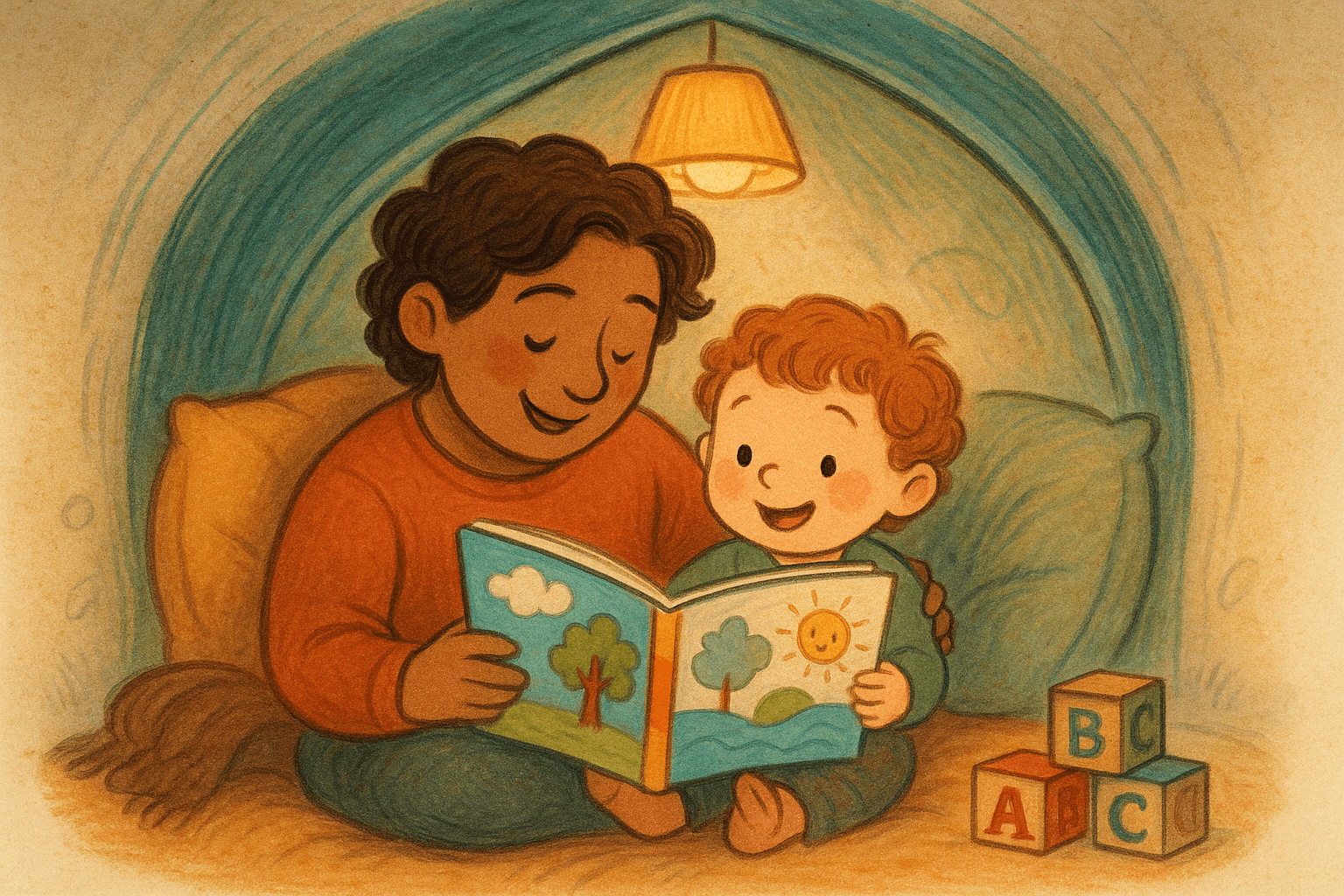
You don't need expensive classes to support your child's brain development. The most powerful brain-building moments happen in ordinary routines at home—talking at breakfast, reading before bed, and playing on the floor together.
In the early years, the brain forms connections rapidly. Small, consistent habits can strengthen learning, memory, language, focus, and emotional regulation.
1) Talk Through Your Day
Narrate simple actions: "We're peeling a banana," or "Let's fold the blue shirt."
Ask open-ended questions and pause for responses, even if your child answers with gestures or one-word replies.
Why it helps: Back-and-forth conversation builds vocabulary, listening, and early thinking skills.
2) Read Together Every Day 📚
A daily 10–15 minute reading habit can make a big difference.
Point at pictures, use expressive voices, and ask prediction questions like: "What do you think happens next?"
Re-reading favorite books is great for memory and confidence.
Why it helps: Reading supports language growth, attention, comprehension, and parent-child bonding.
3) Use Music and Rhythm 🎶
Sing nursery rhymes, clap rhythms, and try action songs with movement.
Music is especially useful during transitions like cleanup, bath time, or bedtime.
Why it helps: Rhythm activities support memory, sequencing, mood, and self-regulation.
4) Protect Child-Led Play Time 🧸
Make space for daily free play with blocks, pretend toys, crayons, or puzzles.
Try simple brain games like "I Spy," "Simon Says," or matching cards.
Why it helps: Play develops creativity, problem-solving, social skills, and attention control.
5) Prioritize Sleep and Brain-Friendly Nutrition 🌙🍎
Keep bedtime consistent and create a calm wind-down routine.
Offer balanced meals with fruits, vegetables, whole grains, protein, and hydration.
Why it helps: Sleep and nutrition directly affect focus, memory, behavior, and learning energy.
6) Add Movement Every Day 🚴
Encourage running, jumping, dancing, climbing, and outdoor play.
Use short movement breaks between quieter activities.
Why it helps: Physical activity improves coordination, emotional balance, and healthy brain function.
7) Build Emotional Safety at Home ❤️
Children learn best when they feel safe, connected, and encouraged.
Use predictable routines, gentle coaching, and praise for effort instead of perfection.
Why it helps: Lower stress helps the brain stay open for learning and memory.
Quick Daily Brain-Boost Checklist
- Talk during routines (meals, bath, chores)
- Read one book
- Sing one song
- Give 20–30 minutes of child-led play
- Include active movement
- Keep bedtime consistent
Final Thought
The best tools for brain development are already in your home: your voice, your time, your play, and your love.
At Learn & Laugh Kids TV, we make learning joyful with songs, stories, and playful activities families can use every day.
Related Reading
- [Building Early Literacy Skills: 10 Fun Activities for Preschoolers](/blog/early-literacy-tips)
- [The Power of Play: How Games Shape Your Child's Mind](/blog/power-of-play-games-shape-child-mind)
- [Learning Math Through Play: Making Numbers Fun](/blog/math-through-play)
👉 Explore more at Learn & Laugh Kids TV and turn everyday moments into learning moments.