Raising a Racket: How Tennis Nurtures Your Child's Body, Mind, and Spirit
Beyond forehands and backhands, kids' tennis is a powerful playground for life lessons. This guide helps you nurture a lifelong love for the game, with age-appropriate tips, practical routines, and a focus on holistic development.
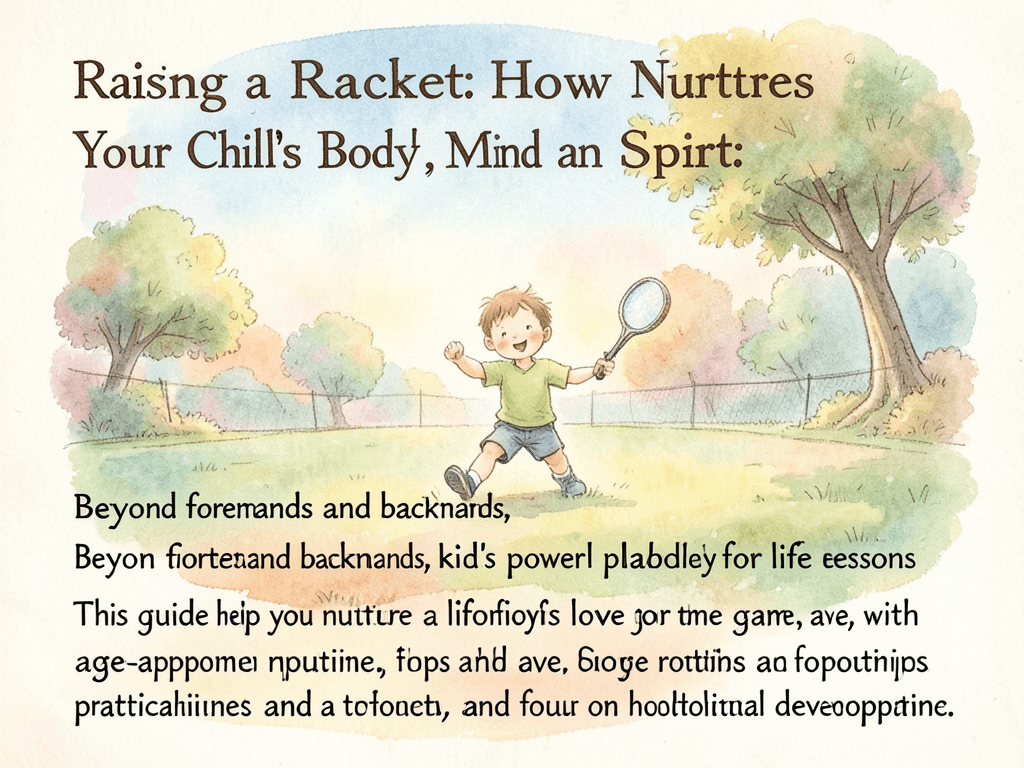
When we picture our child on a tennis court, it's easy to imagine future championships or perfect technique. But zoom out a little further. That rectangle of asphalt or clay is far more than a sports venue; it's a dynamic classroom for resilience, a laboratory for problem-solving, and a social hub where friendships are forged. Introducing your child to tennis isn't just about creating an athlete—it's about equipping a human being with tools that will serve them for decades, both on and off the court. This guide moves beyond scores and rankings to explore how you, as a parent, can foster a healthy, joyful, and enduring relationship between your child and this beautiful game.
The Holistic Serve: More Than Just a Sport
Tennis is uniquely positioned to support a child's development. It's an individual sport that requires intense personal accountability, yet it's often learned in a group setting, teaching cooperation. It demands physical coordination while simultaneously engaging strategic thinking—a true workout for the body and brain. Research in child development highlights that activities combining aerobic exercise with complex motor skills and cognitive demands (like tracking a ball and planning a shot) can enhance neural connectivity. Emotionally, tennis teaches children to manage frustration, celebrate small victories, and develop a growth mindset with every point played, whether they win or lose.
Starting Right: Age-Appropriate Introductions (3-12 Years)
The key to sparking a lasting interest is matching the activity to your child's developmental stage. Pushing formal skills too early can extinguish joy.
* Ages 3-5 (The Explorer): This is all about play and connection. Use foam or low-compression balls, and a small, safe space. Roll balls, play catch, and use simple targets. The goal is hand-eye coordination and the idea that the racket is a fun tool. Keep "rallying" to just one or two hits. A 20-minute session is plenty.
* Ages 6-8 (The Builder): Motor skills are rapidly developing. Introduce a proper low-compression ball and a smaller court (like a service box). Focus on simple rallying, basic movement patterns (ready position, side steps), and the foundational shapes of strokes without technical overload. Emphasize "keeping the ball in play" over power. Sessions can be 30-45 minutes.
* Ages 9-12 (The Strategist): Children can now grasp tactics and more complex techniques. They can move to a full court with regular balls (or transition balls). This is the ideal time for more structured lessons that blend technique with simple game scenarios (e.g., "Let's play a game where you only win the point if you hit to the backhand side").
What to Avoid: Common Parental Pitfalls
Your role is crucial as the chief supporter, not the assistant coach. Avoid these common missteps:
1. Over-coaching from the sidelines: Constant technical instructions ("Bend your knees!", "Follow through!") during play breeds anxiety and distraction. Save feedback for later, or leave it to the coach.
2. Emphasizing winning over learning: Asking "Did you win?" immediately after a match places value on the wrong metric. Instead, ask "What was the most fun point you played?" or "What did you learn today?"
3. Comparing your child to others: Development is non-linear. Comparing your child's progress to a peer's is a surefire way to create resentment and pressure.
4. Ignoring the signs of burnout: If your child is consistently resistant, overly fatigued, or shows a drop in enthusiasm, it may be time for a break or a reduction in intensity. Listen to them.
Building the Foundation: A Quick Weekly Plan for Beginners (Ages 6-9)
Consistency beats intensity. Here’s a balanced, non-competitive weekly routine:
* Monday: Active Rest. No tennis. Encourage free play, cycling, or swimming.
* Tuesday: Skill & Play (45 mins). A group lesson focusing on one skill (e.g., forehand rally) followed by a fun, cooperative game.
* Wednesday: Family Fun (20 mins). Go to a local wall or short court with your child. Just rally together, count consecutive hits, and laugh.
* Thursday: Physical Literacy Day. No tennis. Focus on general athleticism: jumping, running, agility ladder drills, or another sport.
* Friday: Skill & Play (45 mins). Group lesson, ideally introducing a complementary skill (e.g., volleys) or reinforcing Tuesday's lesson.
* Weekend: Adventure Day. Watch a bit of professional tennis together (focus on the athleticism, not just the score), or go for a hike. Alternatively, have a playful, non-scoring "family tournament" with silly rewards.
The Equipment Equation: Keeping It Simple
You don't need the most expensive gear. You need the right-sized gear. A racket that is too heavy or too long will hinder development and can contribute to strain. A simple guideline: when your child holds the racket at their side, the tip should be near the ground, not dragging on it. For balls, insist on using low-compression (red, orange, green dot) balls appropriate for their age and court size. They bounce lower and move slower, allowing for proper technique and more rallies. Proper athletic shoes with good lateral support are more important than a fancy racket.
Nurturing the Mental Game: Beyond "Try to follow this format exactly for the rest of the content.
Nurturing the Mental Game: Emotional Resilience on Court
Tennis is a sport of errors and immediate consequences. Cultivating a healthy mindset is paramount.
* Reframe Mistakes: Teach that an error is not a failure but "information." A ball in the net tells you about your trajectory. A ball out tells you about your control.
* Develop Rituals: A simple routine between points—like bouncing the ball three times or touching the strings—helps a child reset and focus, building emotional regulation.
* Praise Effort, Not Outcome: "I loved how you kept trying to move your feet on that last point" is more powerful than "Good winner." This reinforces control over the controllable.
* Model Composure: Your reaction to their wins and losses teaches them how to react. Stay calm, supportive, and consistent.
When to Seek Professional Guidance
A good coach is a mentor who understands child development. Look for a program or coach that prioritizes play-based learning over drilling for children under 10. If your child expresses a serious, sustained interest in competition, a more technical coach can help. Always be cautious of any program or person that pushes through pain. If your child complains of persistent joint pain (especially in the elbow or shoulder), or shows signs of significant stress or avoidance, pause and consult with a pediatrician or a sports medicine professional.
Beyond the Baseline: The Lifelong Lessons
The ultimate goal isn't a trophy. It's the child who learns discipline through practice, respect through handshakes, focus by tracking a ball, and grace by accepting a loss. It's about finding a physical activity they can enjoy for a lifetime. Whether they play competitively for a season or socially for 60 years, the court offers a space to grow, challenge themselves, and connect with others.
---
Frequently Asked Questions
Q: My 7-year-old gets frustrated and wants to quit after missing a few shots. What should I do?
A: This is completely normal. First, validate their emotion ("It *is* frustrating when the ball doesn't go where we want"). Then, immediately shift the goal from outcome to process. Suggest a fun challenge: "Let's see if we can just hit the ball back and forth three times in a row. That's our new win." If frustration persists, take a break, get a drink, and return to just hitting gently against a wall. Keeping it light is key.
Q: How do I know if my child is ready for junior tournaments?
A. Readiness is less about age and more about mindset and skill. Look for these signs: They consistently ask to play matches, they understand basic scoring and can play a full set, they can manage their emotions well enough to complete matches without meltdowns, and—most importantly—they see competition as a fun challenge, not a terrifying test. Start with local, non-elimination "fun" tournaments where the emphasis is on participation.
Q: We don't have easy access to courts or coaches. How can we still engage with tennis?
A. The foundation is hand-eye coordination and love of play. A simple brick wall is a fantastic tool. You can practice catching, throwing, and hitting with foam balls. At home, use a balloon or a very soft foam ball to rally in a hallway, focusing on gentle control. Many online resources offer creative at-home drills for footwork and coordination that require minimal space. The focus becomes "playing with a ball and racket," which is the heart of the sport.
---
Your Next Move: This week, grab a foam ball and two rackets (or even two sturdy paper plates!). Find a small space in your yard or living room. Set a simple challenge: "Can we hit it to each other 5 times without dropping it?" Don't keep score. Just laugh, move, and enjoy the connection. That's where the real game begins.